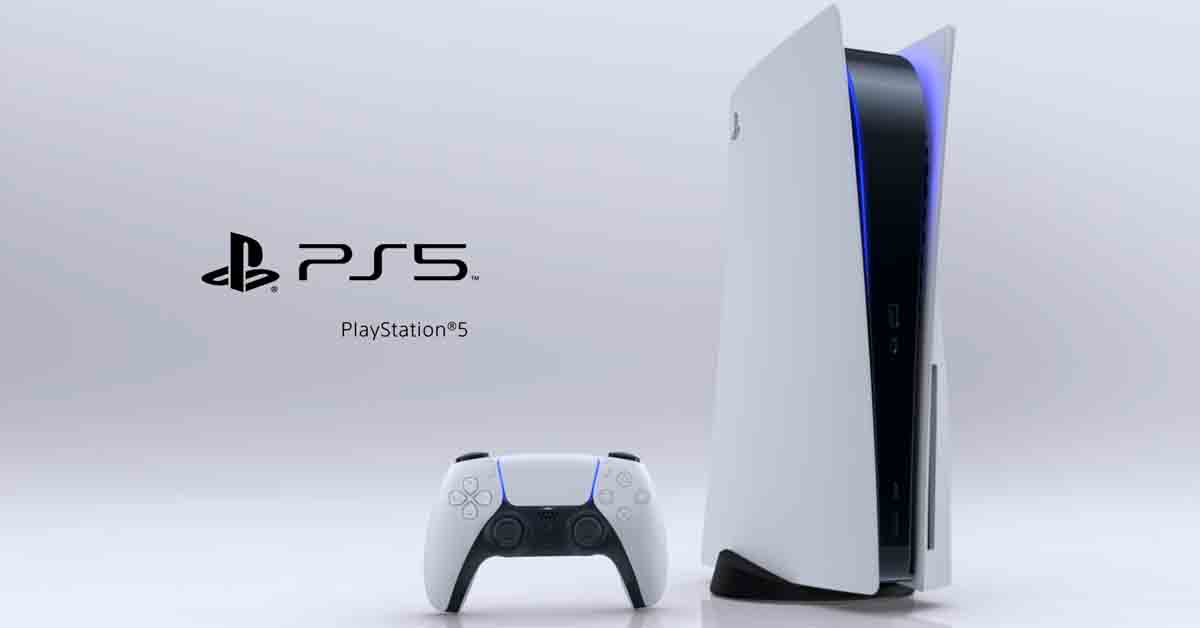
Overview and Design
The Sony PlayStation 5 (PS5) stands as one of the most popular gaming consoles available today, delivering massive upgrades over the PlayStation 4. Originally revealed in 2020, the console sports a bold futuristic aesthetic with white curved side panels, a central black body, and subtle blue accent lighting. Users can choose between two variants: the Standard Edition, which features a 4K UHD Blu-ray disc drive, and the Digital Edition, which omits the optical drive for a slightly slimmer profile. Both versions offer identical gaming performance and come with a stand to support vertical or horizontal setup.
Graphics and Performance
At the core of the PS5 is a custom AMD RDNA 2-based GPU featuring 36 Compute Units running at variable frequencies up to 2.23GHz, capable of delivering up to 10.3 TFLOPS of graphical power. It supports hardware-accelerated ray tracing to render lifelike lighting, reflections, and shadows in compatible titles. Outputting to displays via an HDMI 2.1 port, the console supports up to 4K gaming at 120Hz, 8K resolution, and Variable Refresh Rate (VRR) to minimize screen tearing.
Gamers can switch between Quality mode for enhanced visual fidelity and Performance mode for higher frame rates. While select games can reach up to 120 FPS, many demanding titles offer stable 30 FPS or 60 FPS gameplay modes.
Storage and Connectivity Options
The original PS5 comes equipped with a custom 825GB SSD boasting a raw read bandwidth of 5.5GB/s, drastically cutting down loading times compared to traditional hard drives. To accommodate growing game libraries, the console offers an M.2 NVMe SSD expansion slot alongside support for external USB HDD storage to hold PS4 games and data.
For network and device connectivity, the PlayStation 5 includes Wi-Fi 6, Bluetooth 5.1, Gigabit Ethernet, as well as multiple USB Type-A and Type-C ports. It also comes bundled with the DualSense wireless controller, providing a major upgrade over the older DualShock series.