Introduction and Pricing in Nepal
Infinix has expanded its lineup in Nepal with the release of the Infinix GT 50 Pro, a handset designed specifically with mobile gamers in mind. Following last year's GT 30 Pro—which remains a strong contender around Rs. 65,000—the new GT 50 Pro introduces a faster chipset, enhanced thermal management, and dedicated gaming features. The smartphone is officially available across authorized stores in Nepal for NPR 84,999 (12/256GB). For context, the device retails for INR 69,999 in India. Although Rs. 85,000 places it against tough competitors like the Poco X8 Pro, Infinix brings focused optimizations to the table.
Unboxing & Accessories
Inside the box, users receive a 45W charging adapter, two protective cases, and an external cooling fan. One of the included cases features MagSafe compatibility, allowing the magnetic cooler to attach seamlessly to the back of the device. This cooling accessory supports 15W wireless charging as well as wireless bypass charging, which works to minimize internal heat generation during long gaming sessions.
Design and Build Quality
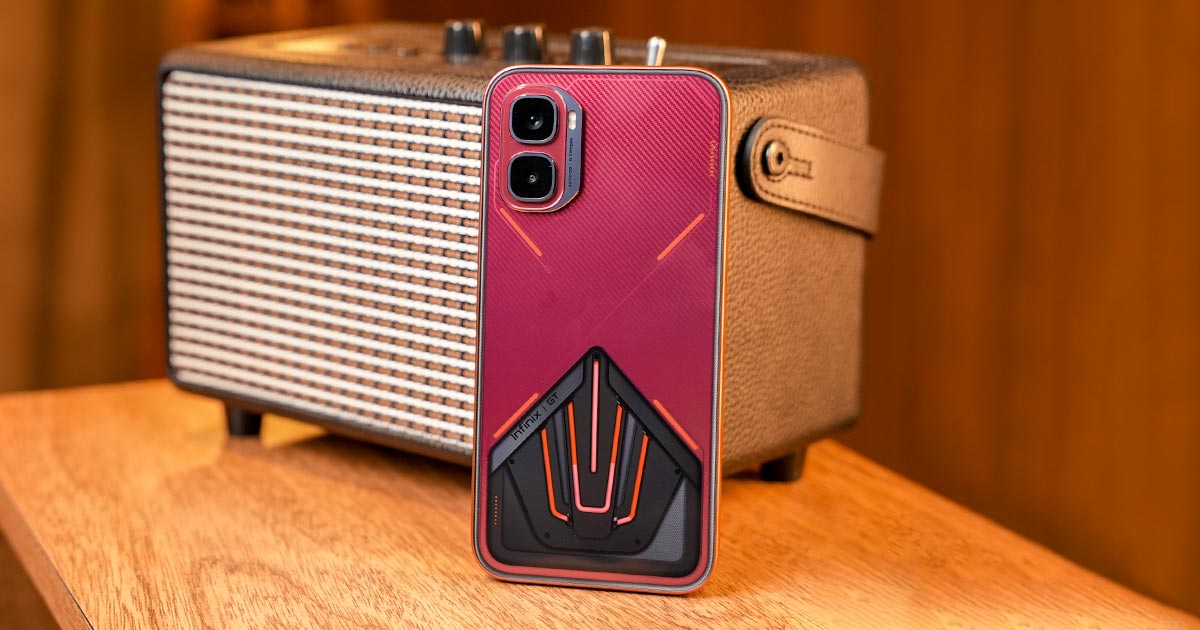
The GT 50 Pro features an aggressive aesthetic offered in Red Blaze, Black, and Silver. A highlighting feature of the back cover is a transparent pipeline design, allowing users to view the liquid flowing inside its cooling apparatus. However, the build employs a plastic frame and rear panel, which feels somewhat basic for an Rs. 85,000 phone. Protection is handled by Gorilla Glass 7i on the front alongside an IP64 dust and splash resistance rating. At 198 grams, it maintains a comfortable in-hand feel for extended use.
Display and Gaming Performance
Up front sits a 6.78-inch 1.5K AMOLED display with a 144Hz refresh rate, though the software UI primarily runs at 120Hz. The panel offers strong brightness levels and carries TÜV Rheinland Low Blue Light certification. Touch response is particularly fast, outperforming rivals like the Poco X8 Pro in competitive titles such as PUBG, where it delivers smooth 120fps gameplay. On the flip side, trade-offs include mediocre cameras, average speakers, basic software features, and modest battery capacity.