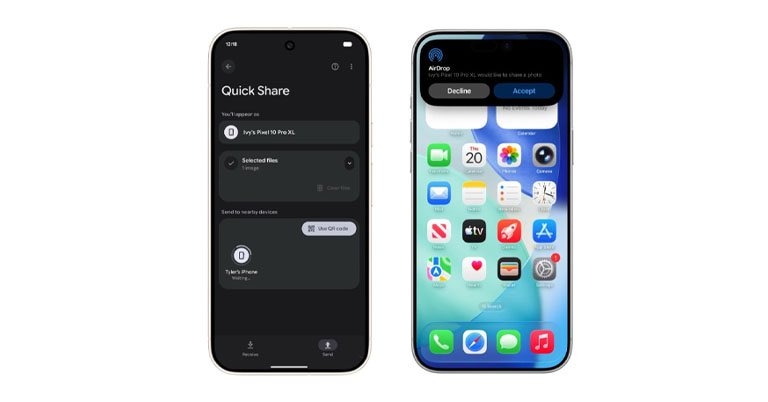
Cross-platform file sharing between Android and iOS devices has long been a common hassle for mobile users. Sharing photos, documents, or videos across operating systems usually required third-party messaging platforms, email attachments, or cloud storage links. In a major leap forward for cross-platform convenience, Google's Pixel 10 now introduces the ability to share files directly with iPhones using Apple's AirDrop technology.
Bridging the Ecosystem Divide
AirDrop has long served as one of Apple's most popular ecosystem features, offering fast and effortless wireless media transfers between iPhones, iPads, and Mac computers. On the Android side, Google relies on Quick Share to handle fast local file transfers across Android phones and laptops. By enabling the Pixel 10 to interact directly with AirDrop, the long-standing transfer barrier between Android and iPhone is finally being addressed.
How Direct Android-to-iPhone Sharing Works
With AirDrop capability integrated into the Pixel 10, sending media directly to an iPhone is streamlined into a native experience. Users can pick their photos or documents on the Pixel 10, select the file-sharing option, and broadcast to nearby iPhones using the AirDrop protocol. Nearby iPhone users will see the incoming transfer request just as if it were sent from another Apple device.
A Major Victory for Smartphone Interoperability
The ability for an Android smartphone to communicate natively with Apple's file sharing system represents a significant shift in mobile interoperability. For everyday users who regularly exchange media with friends and colleagues across platforms, this Pixel 10 capability makes sharing files faster, easier, and far more convenient than ever before.